
VNG (Video Nystagmography) Test
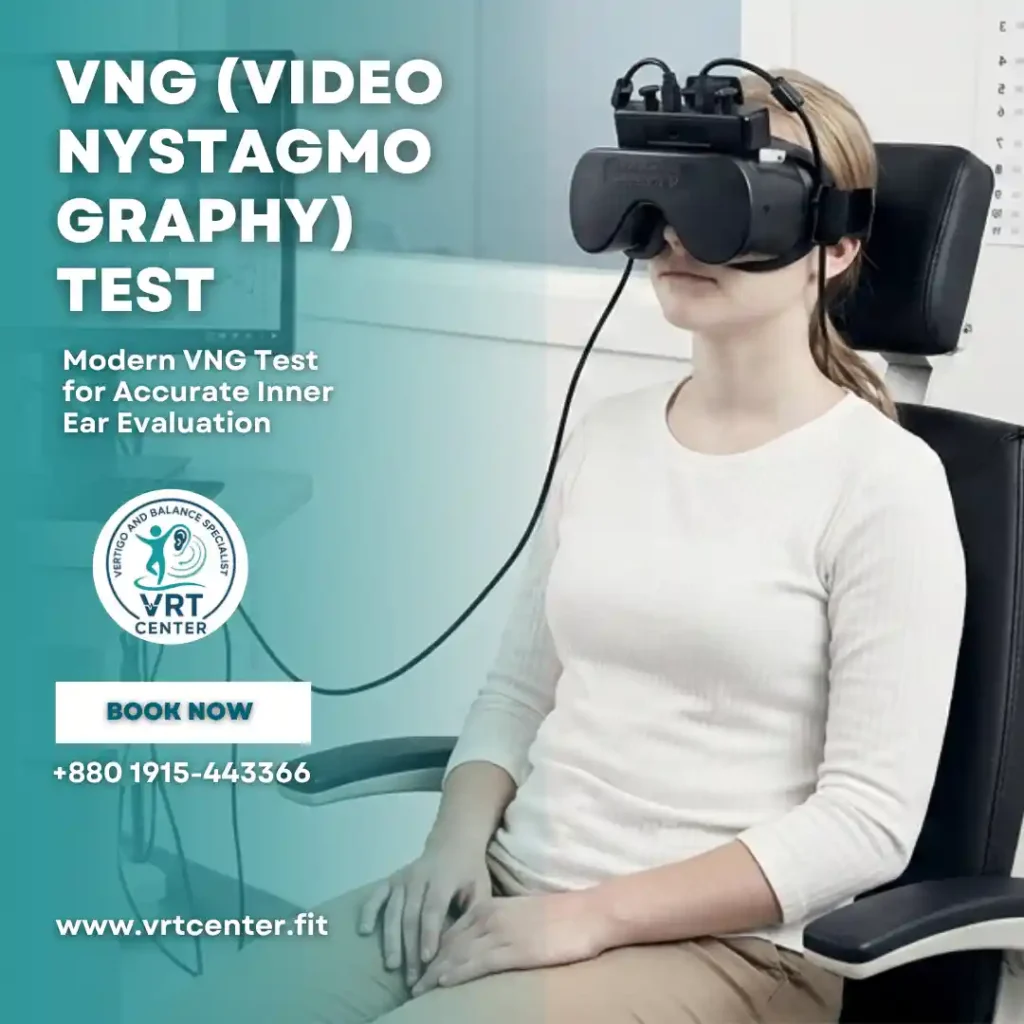
Get a precise and reliable evaluation for dizziness, vertigo, and balance problems with advanced VNG testing.
VNG (Video Nystagmography) Test is a modern diagnostic procedure used to assess the inner ear (vestibular system) and eye movements. It helps identify the exact cause of dizziness, vertigo, and balance issues by analyzing how the brain and inner ear work together.
This test is recommended for people who experience frequent dizziness, spinning sensations, or difficulty maintaining balance. During the procedure, special video goggles track eye movements while different tests are performed, including eye movement, positional, and caloric testing. The entire process is safe, non-invasive, and painless.
VNG testing provides accurate results, helping doctors diagnose the problem correctly and create an effective treatment plan. If you are struggling with ongoing dizziness or balance problems, early testing can lead to faster recovery and better outcomes.
Taking a VNG test is a simple yet important step toward understanding your condition and getting the right care. If you or your loved ones are facing balance-related problems, consider booking a test and consulting a specialist for proper evaluation and treatment.
vHIT (Video Head Impulse Test)
Accurate Diagnosis for Vertigo and Balance Disorders.
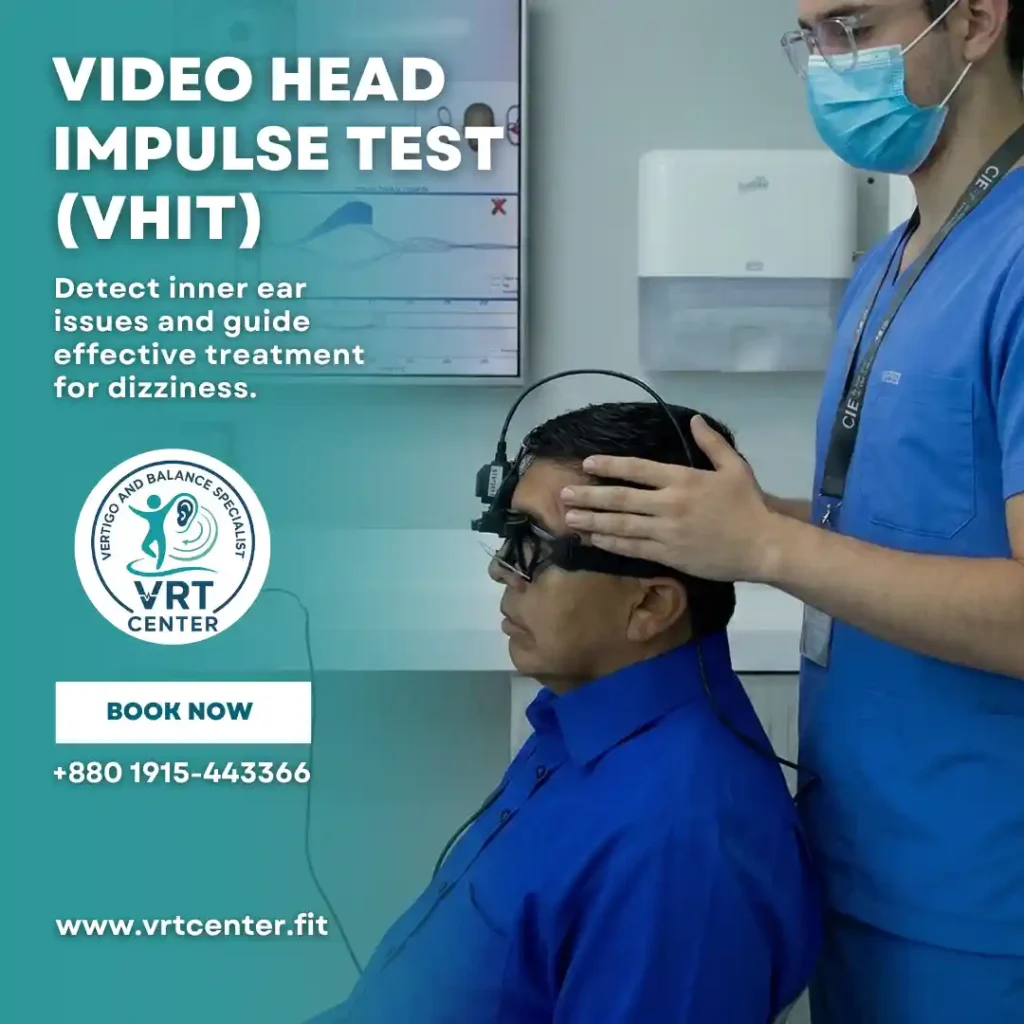
The Video Head Impulse Test (vHIT) is a state-of-the-art diagnostic procedure used to evaluate the inner ear’s vestibular system with extreme precision. It helps identify the exact cause of dizziness and balance issues by analyzing how the brain and inner ear work together.
Why is vHIT Essential for You?
Highly Accurate: It specifically identifies which of the six semicircular canals in the inner ear is affected.
Fast & Efficient: The entire procedure is completed in less than 15 minutes with instant results.
Completely Painless: This is a non-invasive test that does not cause the intense dizziness often felt during older testing methods.
Advanced Technology: Using high-speed video goggles, it detects subtle eye movements that the human eye cannot see.
Who Should Get This Test? If you experience frequent vertigo, spinning sensations, or a loss of stability while walking, a vHIT test is the first step toward a reliable evaluation and an effective recovery plan.
Expert Care at VRT Center We use advanced vHIT technology to provide a precise diagnosis, allowing our specialists to create a targeted treatment plan specifically for your needs.
Positional Testing
Identifying the Trigger of Your Vertigo
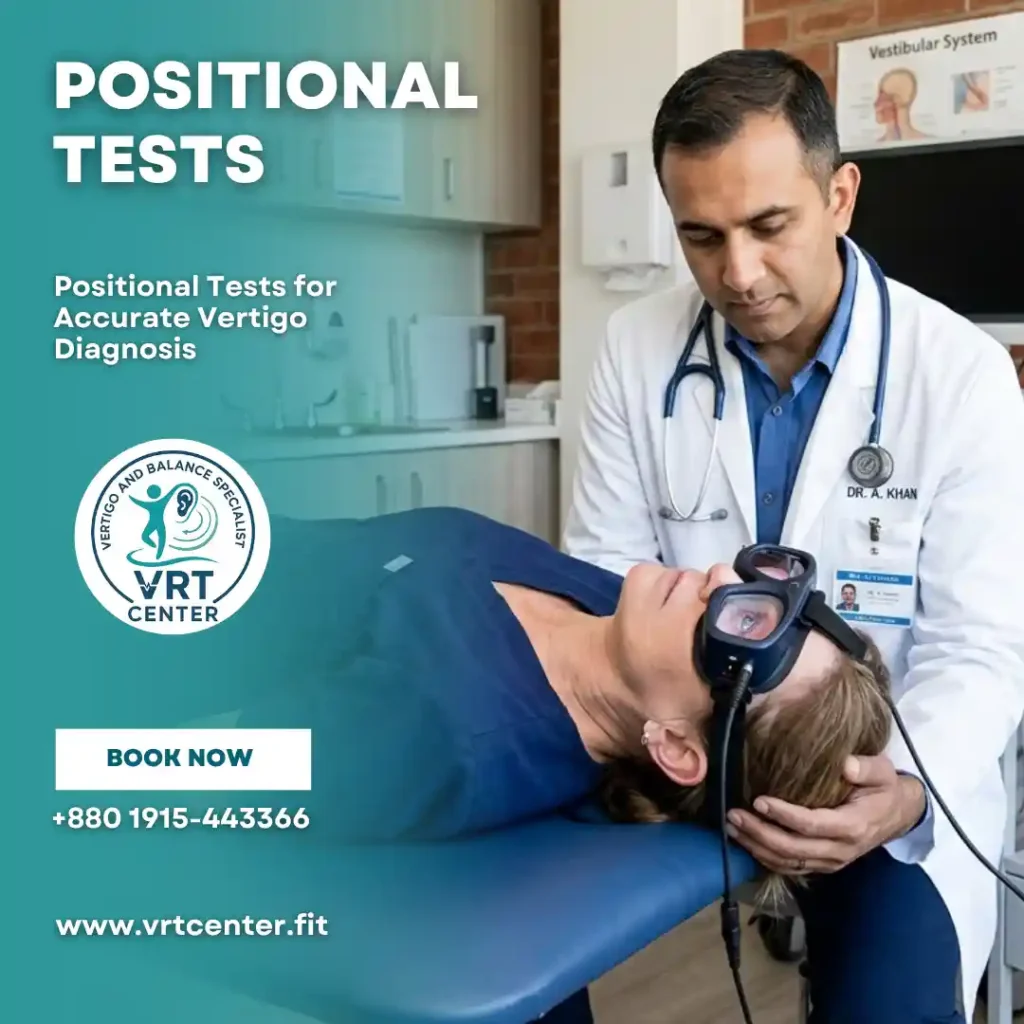
Positional testing is a specialized diagnostic procedure used to assess how changes in head and body position affect your balance system. At the VRT Center, we primarily use these tests to diagnose Benign Paroxysmal Positional Vertigo (BPPV)—a condition where small calcium crystals in the inner ear become displaced and enter the semicircular canals.
How the Procedure Works
During the assessment, our clinicians carefully move your head and body into specific orientations, such as the Dix-Hallpike or Roll Test.
Tracking Eye Movements: We use advanced Infrared VNG Goggles to monitor involuntary eye movements called nystagmus.
Pinpointing the Issue: By observing the direction and duration of these eye movements, we can identify exactly which ear and which specific canal contain the displaced crystals.
Differentiating Causes: This test is crucial for determining if your dizziness is caused by a peripheral inner ear issue or a central nervous system concern.
Expert Balance Care at VRT Center
Don’t let vertigo disrupt your life. Our advanced diagnostics ensure you get the right treatment for a faster recovery.
Epley Maneuver
The Immediate Solution for Vertigo
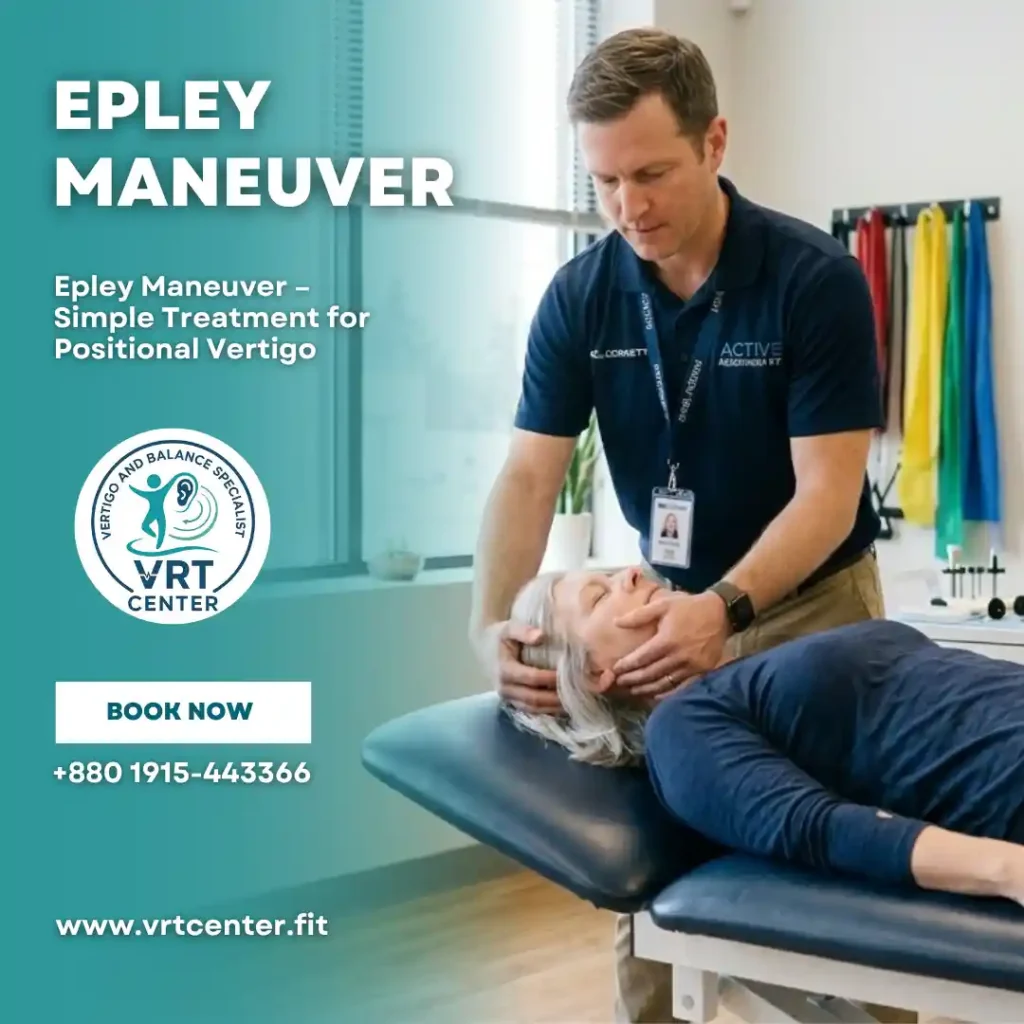
The Epley Maneuver is a series of guided head and body movements used to treat BPPV (Benign Paroxysmal Positional Vertigo). It works by using gravity to move displaced calcium crystals out of the semicircular canals and back into their proper place in the inner ear.
Why it is Effective:
Instant Relief: Many patients experience a significant reduction or total disappearance of vertigo symptoms after just one session.
Non-Invasive: This is a completely drug-free and non-surgical treatment.
Highly Targeted: It is only performed after a precise diagnosis from a positional test to ensure the correct canal is being treated.
Professional Guidance: At VRT Center, our specialists perform this maneuver with precision to ensure patient safety and maximum effectiveness.
What to Expect: During the maneuver, you will be guided through four specific head positions, holding each for about 30 seconds. You may feel a brief sensation of vertigo during the process, which indicates the crystals are moving correctly toward the exit of the canal.
Fall Risk Assessment
Protecting Your Mobility and Independence
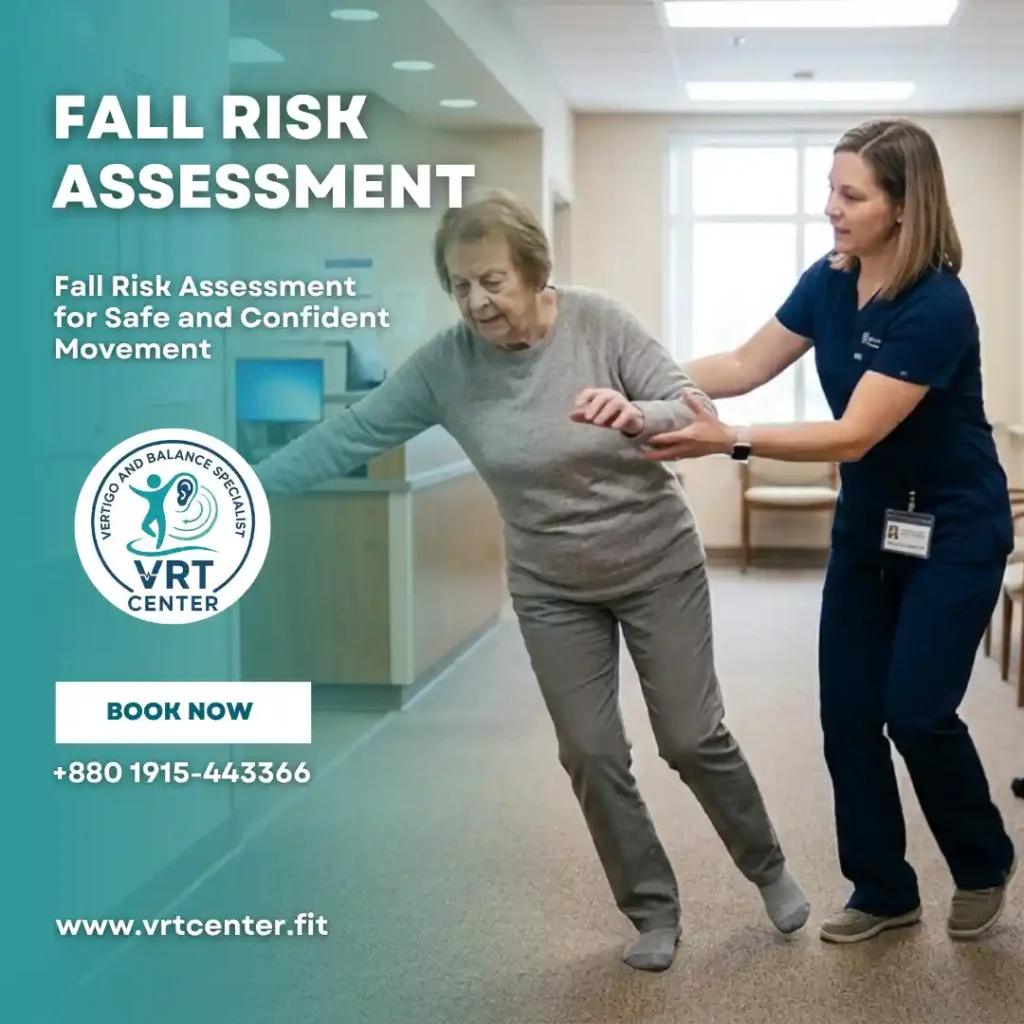
A Fall Risk Assessment is a comprehensive screening used to determine how likely a person is to experience a fall. It involves a combination of specialized physical tests and advanced diagnostic technology to evaluate balance, gait, and vestibular function.
Why is it Critical?
Proactive Prevention: It identifies subtle balance issues before they lead to a dangerous fall or injury.
Detailed Evaluation: Our specialists analyze multiple factors, including inner ear function, vision, and muscle strength.
Customized Care: The results are used to create a targeted Vestibular Rehabilitation plan or strength program specifically for your needs.
Objective Data: We use advanced tools to provide a reliable evaluation of your stability compared to healthy standards.
Who Needs This Assessment?
Individuals over the age of 60.
Anyone who has experienced a recent fall or “near-miss”.
People experiencing dizziness, lightheadedness, or spinning sensations.
Those with chronic conditions that affect mobility or sensation.
Vestibular Rehabilitation Therapy
Protecting Your Mobility and Independence
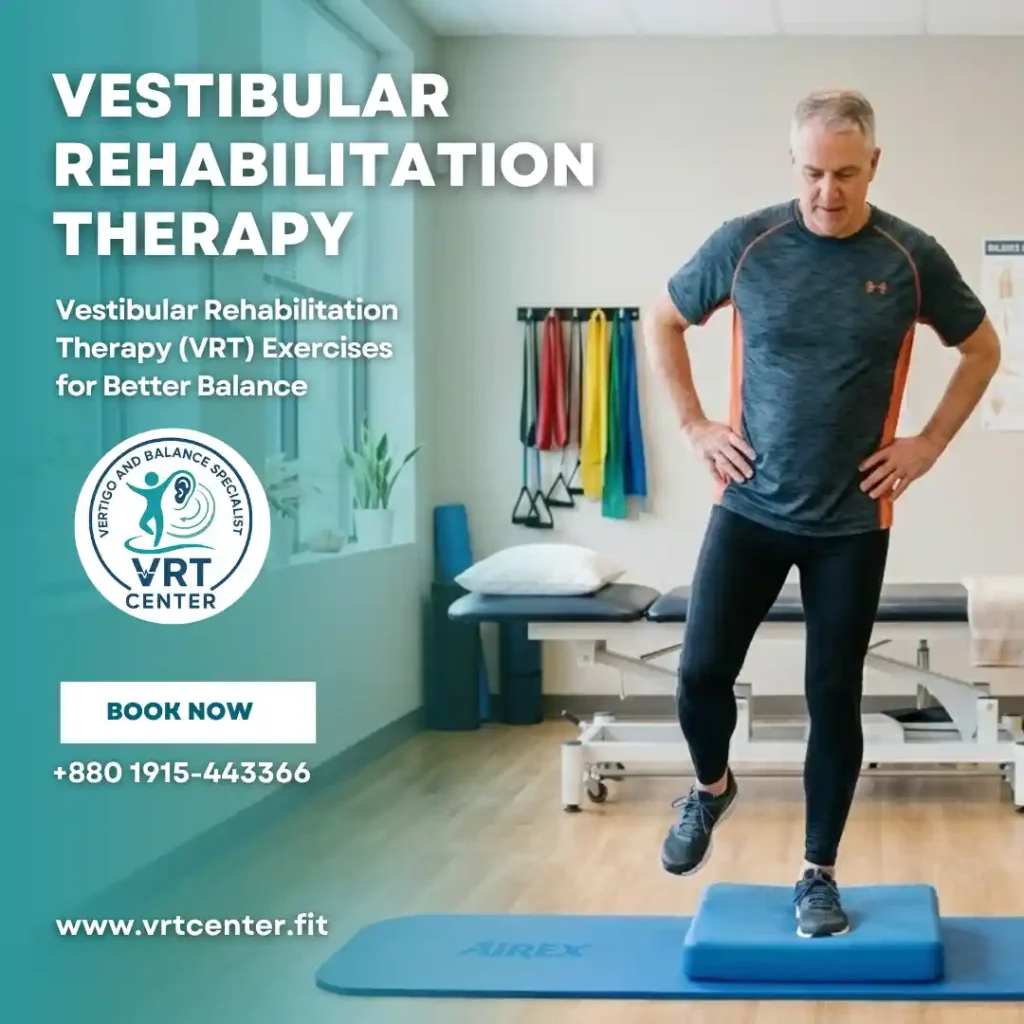
VRT is a customized clinical program that retrains the brain to process signals from the vestibular system (inner ear) in coordination with vision and proprioception (touch/balance). It is highly effective for patients who continue to feel “off-balance” even after the initial vertigo has subsided.
Core Components of VRT:
Gaze Stabilization: Exercises designed to improve control of eye movements so vision remains clear during head movement.
Habituation Exercises: Targeted exposure to specific movements that trigger dizziness, helping the brain “get used to” and eventually ignore those signals.
Balance Training: Activities used to improve steadiness during standing and walking, tailored to the patient’s specific environment and daily needs.
Sensory Integration: Training the brain to rely on healthy sensory inputs (like vision or touch) when the inner ear is providing inaccurate information.
Who Can Benefit?
VRT is an essential solution for individuals suffering from:
Chronic dizziness or “brain fog”.
Vestibular Neuritis or Labyrinthitis.
Post-concussion balance issues.
Age-related imbalance and increased fall risk.
Vestibular Assessment
A Complete Diagnostic Overview
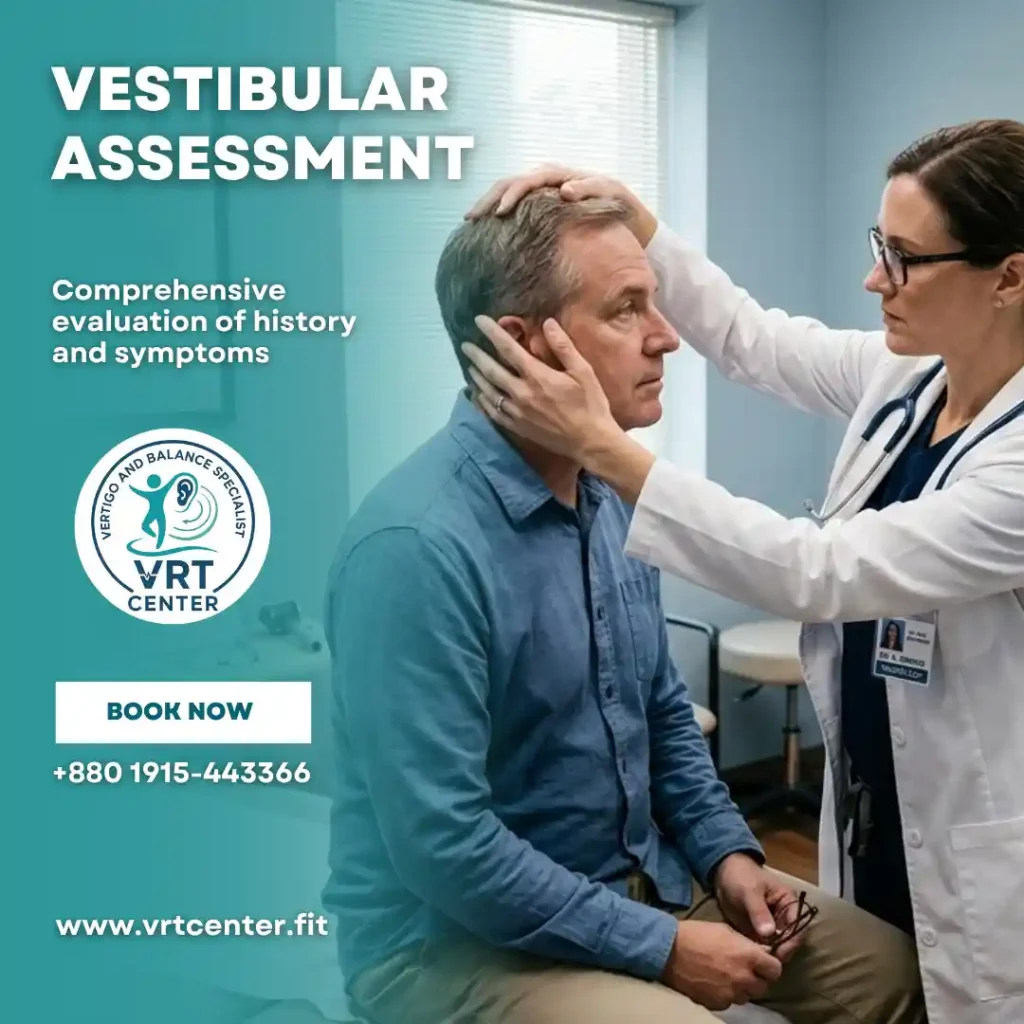
It is a comprehensive evaluation of the vestibular system—the sensory system that provides the dominant input about movement and orientation in space. Since dizziness can stem from various issues, this assessment is the first step in creating a precise and reliable treatment plan.
Key Components of the Assessment:
VNG (Video Nystagmography): Uses infrared goggles to track eye movements (nystagmus) and determine if an inner ear disorder is the cause of dizziness.
vHIT (Video Head Impulse Test): A high-speed test that evaluates how well the inner ear canals react to quick head movements.
Positional Testing: Specifically used to detect BPPV by moving the head into orientations that trigger symptoms.
Clinical Gait & Balance Screening: Analyzes your walking pattern and stability to assess fall risks.
Why is this Assessment Necessary?
Accuracy: It identifies whether the problem is in the inner ear (peripheral) or the brain (central).
Efficiency: Helps avoid “trial and error” treatments by providing a definitive diagnosis.
Safety: Most tests are non-invasive, painless, and safe for patients of all ages.
Personalization: The results allow our specialists to guide effective treatment, such as customized VRT Therapy.