
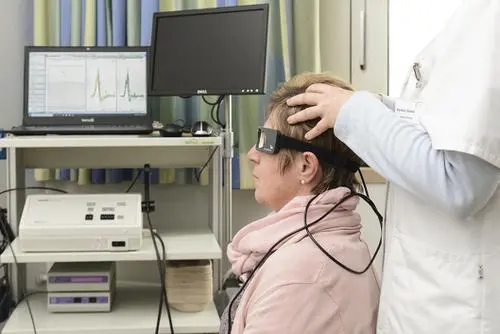
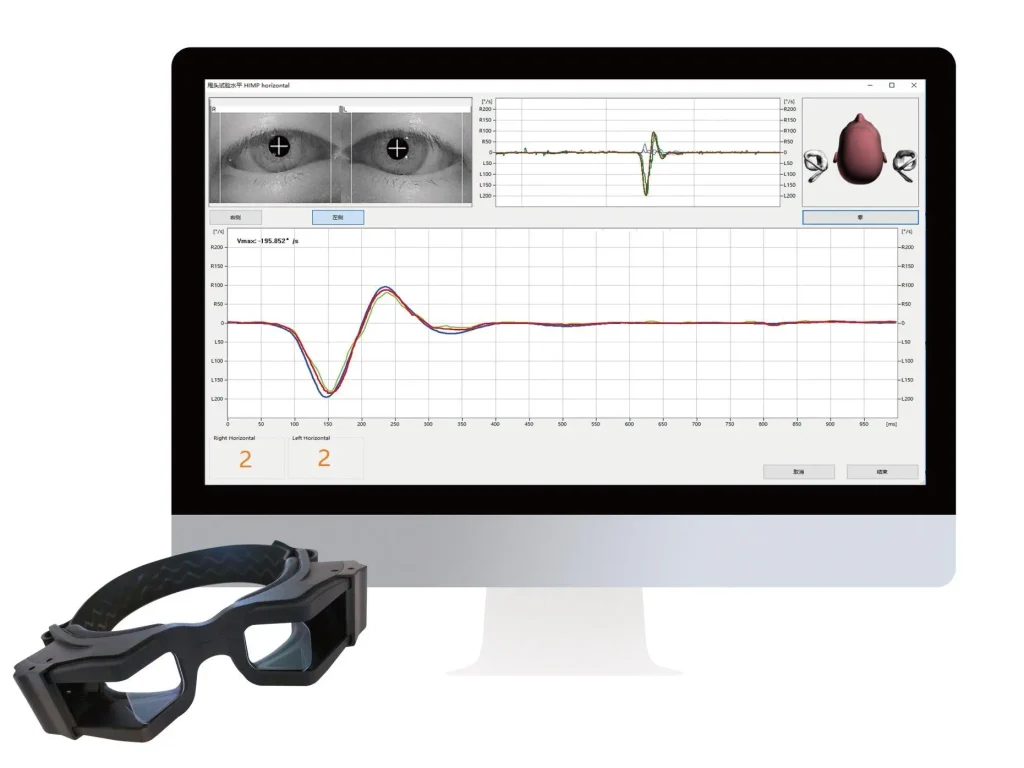
The Video Head Impulse Test in Dhaka is an advanced, non-invasive vestibular assessment used to evaluate inner ear balance function. Also known as the vHIT test, it helps healthcare professionals assess the semicircular canals and vestibulo-ocular reflex (VOR) in patients experiencing dizziness, vertigo, and balance problems.
At Vertigo & Balance Center, Green Road, Dhaka, vestibular assessments help evaluate patients with dizziness, vertigo, and balance-related difficulties.
Dizziness, vertigo, and balance problems can affect your ability to walk, move your head, and perform everyday activities. These symptoms may sometimes be related to problems in the vestibular system, which helps maintain balance and stabilize vision during head movements.
The Video Head Impulse Test (vHIT) is a specialized vestibular assessment used to evaluate the function of the semicircular canals in the inner ear. It helps healthcare professionals identify abnormalities in the vestibulo-ocular reflex (VOR), which plays an important role in maintaining clear vision during head movements.
At Vertigo & Balance Center in Green Road, Dhaka, vestibular assessments help evaluate patients experiencing dizziness, vertigo, and balance-related difficulties.
What Is a Video Head Impulse Test (vHIT)?
The Video Head Impulse Test (vHIT) is a non-invasive diagnostic test used to assess the function of the vestibular system, particularly the semicircular canals of the inner ear.
During the test, a patient wears lightweight video goggles equipped with high-speed cameras and motion sensors. A trained examiner gently delivers small, quick, and unpredictable head movements while the patient focuses on a fixed target.
The system records eye movements and head movements to evaluate the vestibulo-ocular reflex (VOR).
The results help identify reduced vestibular function and abnormal eye movements, including corrective saccades.
Why Is a vHIT Test Important?
The vestibular system helps your brain understand head movement and maintain balance. When the vestibular system does not function properly, you may experience dizziness, unsteadiness, or difficulty maintaining visual focus during movement.
A Video Head Impulse Test can help evaluate:
- Reduced function of the semicircular canals.
- Abnormal vestibulo-ocular reflex (VOR).
- Vestibular hypofunction.
- Corrective saccadic eye movements.
- Possible vestibular involvement in patients with dizziness and balance problems.
The test provides useful information to support the clinical evaluation of vestibular disorders.
When Do You Need a Video Head Impulse Test?
A healthcare professional may recommend a vHIT test if you experience:
1. Frequent Dizziness
Repeated episodes of dizziness may indicate a problem involving the vestibular system.
2. Vertigo or Spinning Sensation
A sensation that you or your surroundings are spinning may require further vestibular assessment.
3. Loss of Balance While Walking
Difficulty maintaining balance while walking may be associated with vestibular dysfunction.
4. Blurred Vision During Head Movement
Some people experience difficulty keeping their vision stable when turning their head or moving quickly.
5. Unsteadiness During Daily Activities
Feeling unstable while standing, walking, or moving your head may indicate a need for vestibular evaluation.
How Is the Video Head Impulse Test Performed?
The vHIT procedure is generally quick and non-invasive. The test involves the following steps:
Step 1: Wearing Video Goggles
The patient wears specialized video goggles fitted with high-speed cameras and motion sensors to record eye and head movements.
Step 2: Fixating on a Target
The patient is asked to look at a fixed target positioned in front of them.
Step 3: Gentle Head Movements
The examiner delivers small, quick, and unpredictable head impulses in different directions while the patient maintains focus on the target.
Step 4: Recording Eye Movements
The system records eye movements and head movements to evaluate the vestibulo-ocular reflex.
Step 5: Analyzing the Results
The recorded data are analyzed to assess VOR gain and identify corrective saccades, helping evaluate semicircular canal function.
What Does a vHIT Test Measure?
The Video Head Impulse Test mainly evaluates two important parameters:
1. VOR Gain
VOR gain measures how effectively the eyes compensate for head movement to maintain visual stability.
Reduced VOR gain may indicate reduced function of the vestibular system in the tested semicircular canal.
2. Corrective Saccades
Corrective saccades are small, rapid eye movements that help bring the eyes back to the target when the vestibulo-ocular reflex does not adequately stabilize vision.
These movements may occur during or immediately after head movement.
Both parameters are important when interpreting vHIT results.
Is the Video Head Impulse Test Painful?
No. The Video Head Impulse Test is generally painless and non-invasive.
The examiner performs small, quick head movements while monitoring eye responses. Some patients may experience mild discomfort or temporary dizziness during the procedure.
The test should be performed by a trained professional.
Difference Between vHIT and VNG Tests
Both vHIT and Videonystagmography (VNG) are used in vestibular assessment, but they evaluate different aspects of vestibular function.
- vHIT: Evaluates the vestibulo-ocular reflex during rapid head movements and assesses semicircular canal function.
- VNG: Records and analyzes eye movements to help assess vestibular function, including responses to different positional and oculomotor tests.
Depending on the patient’s symptoms and clinical findings, healthcare professionals may recommend one or both tests.
Where to Get a Video Head Impulse Test in Dhaka, Bangladesh?
If you are experiencing dizziness, vertigo, blurred vision during head movement, or difficulty maintaining balance, an appropriate vestibular assessment may help identify possible causes.
Vertigo & Balance Center, located in Green Road, Dhaka, provides specialized vestibular assessment and balance-related services.
Our assessment services are designed to help evaluate vestibular function and guide appropriate management and Vestibular Rehabilitation Therapy (VRT), when indicated.
Contact us to learn more about Video Head Impulse Testing (vHIT) and other vestibular assessment options.
Frequently Asked Questions (FAQ)
1. What is a Video Head Impulse Test (vHIT)?
A vHIT is a non-invasive vestibular test that evaluates semicircular canal function by measuring eye movements in response to quick head movements.
2. How long does a vHIT test take?
The testing procedure is generally completed within a short period, although the total appointment time may vary depending on the assessment and patient.
3. Is vHIT test safe?
Yes. It is generally considered a safe and non-invasive assessment when performed by a trained professional.
4. Can a vHIT test diagnose vertigo?
The vHIT test can identify certain vestibular abnormalities that may contribute to dizziness and vertigo. However, it cannot diagnose every cause of vertigo on its own.
5. What is the difference between vHIT and VNG?
vHIT evaluates the vestibulo-ocular reflex during rapid head movements, while VNG records eye movements during different vestibular and oculomotor assessments.
6. Does every patient with dizziness need a vHIT test?
No. The need for vHIT depends on the patient’s symptoms, clinical history, and examination findings.
Vertigo & Balance Center – Green Road, Dhaka, Bangladesh
For information and appointments:
Call: 01915443366
Get professional guidance for dizziness, vertigo, and balance-related problems.