
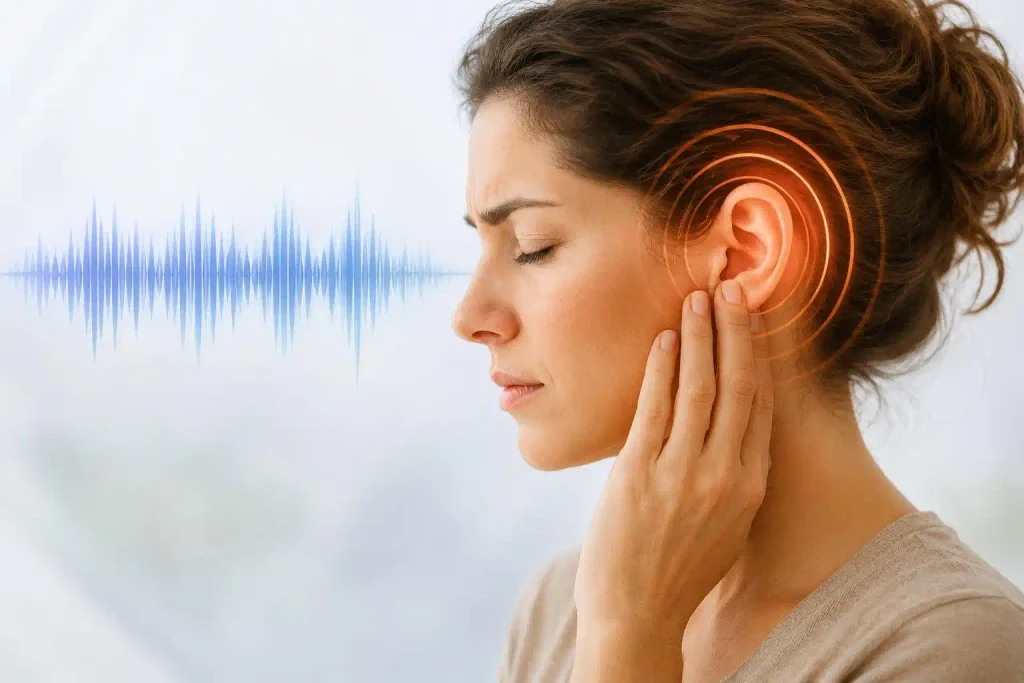
Do you sometimes hear ringing, buzzing, humming, or whistling sounds in your ears even when there is no external sound? This condition is known as Tinnitus.
Tinnitus is a common hearing-related symptom that can affect one ear, both ears, or sometimes feel as though the sound is coming from inside the head. Some people experience it occasionally, while others hear these sounds continuously.
For many individuals, tinnitus can affect sleep, concentration, emotional well-being, and daily activities.
But what causes ringing in the ears? Is tinnitus related to hearing loss or inner ear problems? And what treatment options are available?
In this article, we will explore the common causes of tinnitus, its symptoms, diagnostic methods, and available treatment options.
What Is Tinnitus?
Tinnitus is the perception of sound without an external sound source. It means that a person hears a sound that other people cannot normally hear.
Tinnitus is not a disease itself. It is a symptom that may be associated with different hearing, ear, neurological, or other health conditions.
People with tinnitus may experience different types of sounds, including:
- Ringing or buzzing in the ears.
- Humming or humming-like sounds.
- Whistling or high-pitched noises.
- Hissing or roaring sounds.
- Clicking or pulsing sounds.
Tinnitus can be temporary or persistent. It may also vary in intensity throughout the day.
5 Common Causes of Tinnitus (Ringing in the Ears)
There are several possible causes of tinnitus. Identifying the underlying cause is important for choosing an appropriate management plan.
1. Hearing Loss
Hearing loss is one of the most common conditions associated with tinnitus.
When the auditory system receives reduced sound input, changes in the brain’s processing of sound may contribute to the perception of ringing or buzzing.
Hearing loss may develop gradually with age or occur after exposure to loud noise.
Common associated symptoms:
- Ringing or buzzing in the ears.
- Difficulty understanding conversations.
- Frequently asking others to repeat themselves.
- Difficulty hearing in noisy environments.
- Feeling that sounds are unclear or muffled.
What can help?
A comprehensive hearing assessment can identify hearing difficulties.
When tinnitus occurs alongside hearing loss that affects communication, hearing aids may improve hearing and can also help reduce the awareness of tinnitus for some people.
2. Exposure to Loud Noise
Prolonged exposure to loud sounds can damage the delicate sensory structures involved in hearing.
This may happen after attending loud concerts, working in noisy environments, using headphones at high volumes, or experiencing sudden loud sounds.
Noise-related tinnitus may occur temporarily or become persistent.
Common symptoms include:
- Ringing after exposure to loud sounds.
- Buzzing or high-pitched noises.
- Temporary muffled hearing.
- Increased sensitivity to certain sounds.
What can help?
- Reduce exposure to loud sounds.
- Keep headphone volume at a safe level.
- Use appropriate hearing protection in noisy environments.
- Take regular breaks from loud noise.
- Seek a hearing assessment if symptoms persist.
Protecting your hearing is an important part of preventing noise-related hearing problems.
3. Earwax Buildup or Ear Infection
Earwax helps protect the ear canal, but excessive accumulation can block the ear canal and interfere with normal hearing.
An ear infection or fluid behind the eardrum may also contribute to ringing or buzzing sounds.
Common symptoms include:
- Ringing or buzzing in one or both ears.
- A blocked or full feeling in the ear.
- Reduced hearing.
- Ear discomfort or pain.
- Sometimes discharge from the ear.
What can help?
A healthcare professional should examine the ear to identify whether wax buildup, infection, or another ear condition is responsible.
Treatment may involve professional earwax removal or appropriate treatment for an infection.
Avoid inserting cotton buds or other objects deep into the ear canal.
4. Ménière’s Disease and Inner Ear Disorders
Ménière’s disease is an inner ear disorder that can affect both hearing and balance.
People with Ménière’s disease may experience recurring vertigo, tinnitus, hearing changes, and a feeling of pressure or fullness in the ear.
Common symptoms include:
- Ringing or buzzing in the ears.
- Recurrent episodes of vertigo.
- Fluctuating hearing loss.
- Ear fullness or pressure.
- Nausea during vertigo attacks.
- Difficulty maintaining balance.
What can help?
Treatment depends on the patient’s symptoms and clinical assessment.
A healthcare professional may recommend lifestyle adjustments, medication for specific symptoms, hearing evaluation, and other appropriate management options.
Vestibular rehabilitation may help selected patients who continue to experience balance problems between vertigo attacks.
5. Medications and Other Medical Conditions
Certain medications can cause or worsen tinnitus, particularly at higher doses or in susceptible individuals.
Some examples include:
- Certain antibiotics.
- Some cancer treatments.
- High doses of aspirin.
- Certain non-steroidal anti-inflammatory drugs (NSAIDs).
- Some other prescription medications.
Other possible contributing conditions include jaw joint disorders, head or neck injuries, and certain blood vessel conditions.
What can help?
If tinnitus begins after starting a new medication or changing a dose, discuss this with your healthcare professional.
Do not stop or change prescribed medication without medical advice.
The appropriate evaluation depends on the person’s medical history, symptoms, and examination findings.
Types of Tinnitus
Tinnitus can be classified into different types based on how the sound is experienced.
1. Subjective Tinnitus
This is the most common type of tinnitus.
Only the affected person can hear the sound. It may be related to hearing loss, noise exposure, or changes in the auditory system.
2. Objective Tinnitus
This is a less common type in which a sound may sometimes be detected by an examiner.
It can be associated with certain vascular or muscular conditions.
3. Pulsatile Tinnitus
Pulsatile tinnitus is a rhythmic sound that often matches the person’s heartbeat.
It may sound like pulsing, whooshing, or throbbing inside the ear.
Persistent pulsatile tinnitus requires medical evaluation to investigate possible underlying causes.
Common Symptoms of Tinnitus
Tinnitus symptoms vary from person to person. Some individuals notice only occasional ringing, while others experience persistent sounds that affect everyday life.
Common symptoms include:
- Ringing or buzzing in one or both ears.
- Humming or whistling sounds.
- Hearing sounds without an external source.
- Difficulty concentrating.
- Sleep disturbances.
- Anxiety or emotional distress.
- Increased awareness of sounds in quiet environments.
- Hearing difficulties when tinnitus occurs with hearing loss.
Not everyone with tinnitus experiences all these symptoms.
How Is Tinnitus Diagnosed?
Finding the possible cause of tinnitus is an important step toward appropriate management.
A healthcare professional may recommend the following assessments:
1. Ear Examination
An examination of the ear canal and eardrum can help identify earwax buildup, infection, or other visible abnormalities.
2. Pure Tone Audiometry (PTA)
A hearing test that measures the ability to hear sounds at different frequencies and volumes.
It helps identify whether hearing loss is present and assess its severity.
3. Tympanometry
This test evaluates the movement of the eardrum and the function of the middle ear.
It may be recommended when middle-ear problems or Eustachian tube dysfunction are suspected.
4. Additional Vestibular Assessment
When tinnitus occurs alongside vertigo or balance difficulties, a specialist may recommend additional vestibular tests.
These may include:
- Videonystagmography (VNG): Evaluates eye movements and aspects of vestibular function.
- Video Head Impulse Test (vHIT): Assesses semicircular canal function and the vestibulo-ocular reflex.
These tests are not routinely required for tinnitus alone. They may be useful when accompanying dizziness or balance symptoms need further investigation.
5. Imaging Tests
In selected cases, MRI, CT, or vascular imaging may be recommended, particularly for pulsatile tinnitus, certain one-sided symptoms, or associated neurological and ear findings.
Not every patient needs imaging. The decision depends on clinical assessment.
Treatment Options for Tinnitus
There is currently no single treatment that eliminates every type of tinnitus. However, several approaches can help manage symptoms and improve quality of life.
1. Treating the Underlying Cause
When tinnitus is associated with a treatable condition, addressing that condition may reduce or resolve the symptoms.
Examples include professional earwax removal, treatment of an ear infection, or reviewing medications that may contribute to tinnitus.
2. Hearing Aids
For people who have tinnitus alongside hearing loss, hearing aids may improve communication and reduce awareness of tinnitus in some cases.
A hearing assessment helps determine whether hearing aids are appropriate.
3. Sound Therapy
Sound therapy uses external sounds to help reduce the contrast between tinnitus and the surrounding environment.
Examples include:
- Soft background music.
- Nature sounds.
- White noise.
- Gentle environmental sounds.
Some people find these sounds helpful, particularly during quiet periods or at bedtime.
4. Cognitive Behavioral Therapy (CBT)
Tinnitus can sometimes cause emotional distress, anxiety, and sleep difficulties.
Cognitive Behavioral Therapy (CBT) can help people manage their emotional responses to tinnitus and reduce its impact on daily life.
5. Tinnitus Counseling and Retraining Approaches
Tinnitus education and counseling help individuals understand their symptoms and develop practical coping strategies.
Tinnitus Retraining Therapy (TRT) combines counseling with sound-based approaches. Its suitability and effectiveness vary between individuals.
6. Vestibular Rehabilitation Therapy (VRT)
Vestibular Rehabilitation Therapy is an exercise-based treatment designed to improve balance, gaze stability, and motion tolerance.
It is not a direct treatment for tinnitus itself. However, it may be beneficial for people who experience tinnitus alongside certain vestibular conditions and ongoing balance difficulties.
Simple Tips to Manage Tinnitus at Home
Some everyday habits may help reduce the impact of tinnitus.
- Protect Your Hearing: Avoid prolonged exposure to loud sounds and use appropriate hearing protection.
- Improve Sleep Habits: Maintain a regular sleep schedule and create a comfortable sleeping environment.
- Manage Stress: Relaxation exercises, breathing techniques, and regular physical activity may help.
- Use Gentle Background Sounds: Soft music or natural sounds may make tinnitus less noticeable in quiet environments.
- Avoid Excessive Caffeine if It Triggers Symptoms: Individual responses vary, so observe whether particular drinks affect your symptoms.
- Stay Physically Active: Regular physical activity supports general health and well-being.
- Get Your Hearing Checked: Seek professional assessment if ringing persists or affects your daily activities.
These strategies can support symptom management but do not replace medical evaluation.
When Should You See a Doctor?
You should seek medical assessment if:
- Ringing or buzzing occurs regularly or continuously.
- Tinnitus is getting worse.
- You experience tinnitus in only one ear.
- You notice hearing changes.
- Tinnitus affects your sleep or concentration.
- You experience tinnitus along with recurrent vertigo or balance problems.
- You hear a pulsing sound that matches your heartbeat.
Important Warning: Sudden hearing loss, especially when accompanied by tinnitus, requires urgent medical assessment. Seek emergency care if tinnitus occurs with sudden facial weakness, other neurological symptoms, or severe uncontrolled vertigo.
Final Thoughts
Tinnitus, commonly known as ringing in the ears, can have several possible causes, including hearing loss, noise exposure, earwax buildup, inner ear disorders, and certain medications.
Although tinnitus does not have one universal cure, identifying its possible cause can help guide appropriate treatment and symptom management.
Hearing assessments, medical evaluation, sound-based approaches, hearing aids when indicated, and psychological support may help many people manage tinnitus more comfortably.
Experiencing ringing, buzzing, or hearing-related problems?
Seek an appropriate hearing and ear assessment to understand the possible cause and discuss suitable management options.
Frequently Asked Questions (FAQs)
1. What is the main cause of tinnitus?
Tinnitus is commonly associated with hearing loss and exposure to loud noise. Other possible causes include earwax buildup, ear infections, certain medications, and inner ear disorders.
2. Is tinnitus a sign of hearing loss?
Tinnitus is often associated with hearing loss, but it can also occur in people whose hearing tests are normal.
3. Can tinnitus go away naturally?
Yes. Tinnitus caused by temporary factors, such as short-term noise exposure or an ear problem, may improve. Persistent tinnitus may require assessment and long-term management.
4. Can stress make tinnitus worse?
Stress and emotional distress may increase tinnitus awareness and make symptoms more difficult to manage in some individuals.
5. Can tinnitus cause dizziness or vertigo?
Tinnitus itself does not usually cause vertigo. However, some inner ear conditions, such as Ménière’s disease, can cause tinnitus, hearing changes, and vertigo together.
6. Is there a permanent cure for tinnitus?
There is no universal cure for tinnitus. However, treating an underlying cause and using appropriate management strategies can reduce its impact on everyday life.
7. Which test is used to diagnose tinnitus?
Pure Tone Audiometry (PTA) is an important hearing assessment. Depending on the symptoms, ear examination, tympanometry, vestibular assessment, or imaging may also be recommended.