
Experiencing frequent dizziness, spinning sensations, or difficulty maintaining balance? These symptoms may be related to problems in the inner ear or vestibular system. A VNG Test for Vertigo is an advanced diagnostic examination that helps specialists evaluate eye movements and assess vestibular function.
Videonystagmography (VNG) is commonly used to investigate the possible causes of vertigo, dizziness, and balance disorders. It records involuntary eye movements and provides valuable information about how the vestibular system responds to different visual and positional stimuli.
In this article, you will learn what a VNG test is, why it is recommended, how the procedure works, and how it helps specialists evaluate balance-related problems.
What Is a VNG Test?
A VNG (Videonystagmography) test is a non-invasive diagnostic procedure that records and analyzes involuntary eye movements, known as nystagmus.
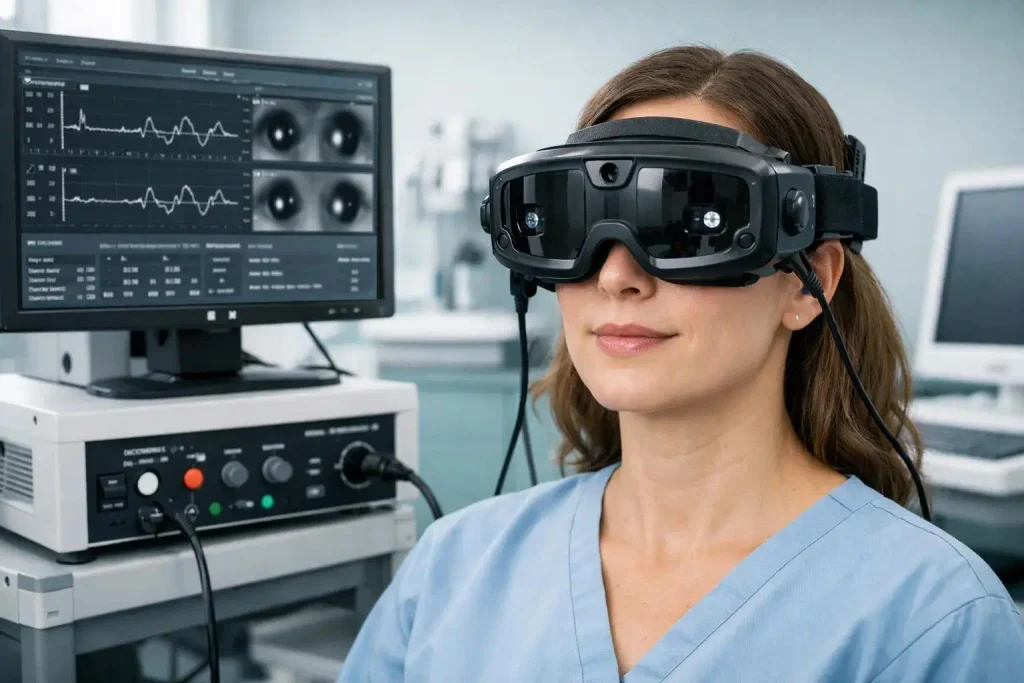
During the examination, patients wear specialized infrared video goggles equipped with cameras that record eye movements. The recorded information helps specialists evaluate the vestibular system, which plays an essential role in maintaining balance and stabilizing vision during head movements.
The vestibular system is located in the inner ear and works together with the eyes, brain, and muscles to maintain body balance.
A VNG test may be recommended for people experiencing:
- Frequent dizziness or vertigo
- Spinning sensations when changing head positions
- Loss of balance while walking
- Unsteadiness while standing
- Nausea associated with dizziness
- Difficulty maintaining visual focus
- Recurrent episodes of unexplained dizziness
Why Is a VNG Test Recommended?
A VNG test for vertigo helps specialists investigate possible abnormalities in the vestibular system.
Dizziness can occur for several reasons, and identifying the underlying cause is important for selecting appropriate treatment.
A specialist may recommend VNG testing in the following situations.
1. Recurrent Vertigo
Vertigo is the sensation that you or your surroundings are spinning. It may occur when turning the head, lying down, getting out of bed, or changing body positions.
VNG testing helps evaluate abnormal eye movements that may be associated with vestibular disorders.
2. Loss of Balance While Walking
Some individuals experience unsteadiness, difficulty walking in a straight line, or a feeling of falling.
Vestibular dysfunction can contribute to these problems. VNG testing provides useful information about vestibular responses.
3. Suspected Inner Ear Disorders
The inner ear contains specialized structures responsible for detecting head movements and maintaining balance.
Problems affecting these structures may cause dizziness, vertigo, and unsteadiness. VNG testing helps evaluate vestibular function and identify possible abnormalities.
4. Dizziness Associated with Nausea
Vestibular problems may cause dizziness accompanied by nausea or vomiting.
A VNG examination may help specialists investigate whether vestibular dysfunction is contributing to these symptoms.
What Conditions Can a VNG Test Help Evaluate?
A VNG test can provide valuable information when evaluating several vestibular and balance-related conditions.
Benign Paroxysmal Positional Vertigo (BPPV)
BPPV is one of the most common causes of positional vertigo. It occurs when tiny calcium carbonate crystals move into an incorrect location within the inner ear.
Patients may experience spinning sensations when:
- Turning over in bed
- Looking up or down
- Getting out of bed
- Bending forward
- Changing head positions
Positional testing during a VNG examination may help identify abnormal eye movements associated with BPPV.
Vestibular Neuritis
Vestibular neuritis is a condition involving inflammation of the vestibular nerve.
It may cause sudden and prolonged vertigo, nausea, and difficulty maintaining balance.
VNG testing can help identify patterns of vestibular weakness and provide information about vestibular function.
Ménière’s Disease
Ménière’s disease is an inner ear disorder that may cause:
- Recurrent episodes of vertigo
- Ringing in the ears (tinnitus)
- Hearing loss
- A feeling of fullness or pressure in the ear
- Nausea and vomiting
VNG testing may help evaluate vestibular function in patients with suspected Ménière’s disease.
Labyrinthitis
Labyrinthitis involves inflammation of the inner ear structures and may cause vertigo, dizziness, and sometimes hearing-related symptoms.
VNG findings may help assess vestibular involvement.
Note: A VNG test alone cannot confirm every vestibular disorder. Diagnosis requires clinical history, physical examination, and additional investigations when appropriate.
How Is a VNG Test Performed?
A VNG test is performed in a clinical setting using specialized infrared video goggles and computerized recording equipment.
During the examination, patients wear goggles that record eye movements while following the specialist’s instructions.
A standard VNG examination generally includes three main components.
1. Oculomotor Testing
During oculomotor testing, patients are asked to follow moving visual targets on a screen without moving their heads.
The specialist evaluates different types of eye movements, including:
- Saccadic eye movements
- Smooth pursuit movements
- Optokinetic responses
These assessments provide information about the visual and neurological pathways involved in controlling eye movements.
2. Positional and Positioning Testing
During positional testing, the patient is guided into different head and body positions.
The specialist observes eye movements to identify abnormal nystagmus that may occur in specific positions.
This assessment can provide useful information when evaluating positional vertigo, including suspected BPPV.
3. Caloric Testing
Caloric testing evaluates the response of the vestibular system by stimulating each ear separately with controlled warm and cool air or water, depending on the equipment and protocol.
The specialist records the resulting eye movements.
This test helps evaluate the function of the horizontal semicircular canals and identify possible differences in vestibular responses between the two ears.
How Long Does a VNG Test Take?
A complete VNG examination commonly takes approximately 45–90 minutes, depending on the testing protocol and the patient’s condition.
Some examinations may take longer if additional assessments are required.
The specialist will explain each step before starting the procedure.
How Should You Prepare for a VNG Test?
Proper preparation helps ensure reliable test results.
Before your appointment, follow the instructions provided by your testing center or healthcare professional.
General preparation may include:
- Avoid wearing eye makeup, mascara, or eyeliner.
- Remove contact lenses if instructed.
- Inform the specialist about all medications you are taking.
- Follow instructions regarding food and drinks.
- Inform the specialist about any recent ear problems.
- Ask whether any medication may interfere with the test.
Important: Do not stop prescribed medication without consulting your healthcare provider. Some medications may affect vestibular responses, but stopping them without medical advice can be unsafe.
Is the VNG Test Painful?
VNG testing is generally non-invasive and does not involve surgery or injections.
Most patients tolerate the examination well.
However, certain parts of the test may temporarily cause:
- Dizziness
- Spinning sensations
- Nausea
- Temporary imbalance
These symptoms generally improve after the examination. Patients who experience significant dizziness should arrange safe transportation home.
What Do VNG Test Results Show?
VNG test results provide information about eye movements and vestibular responses during different testing conditions.
The specialist reviews the recordings to identify possible abnormalities.
The findings may indicate:
- Abnormal involuntary eye movements (nystagmus)
- Possible unilateral vestibular weakness
- Differences in vestibular responses between the ears
- Abnormalities in certain eye movement patterns
- Findings suggesting central or peripheral vestibular involvement
The results are interpreted alongside the patient’s symptoms, medical history, and clinical examination.
An abnormal VNG result does not automatically confirm a specific disease. Additional assessments may be necessary to establish the diagnosis.
What Happens After a VNG Test?
After completing the examination, the recorded eye movements and test responses are reviewed by the appropriate specialist.
Based on the findings, the healthcare provider may recommend further evaluation or an individualized treatment plan.
Depending on the underlying condition, treatment options may include:
- Vestibular Rehabilitation Therapy (VRT)
- Canalith repositioning maneuvers for appropriate cases of BPPV
- Medication when clinically indicated
- Additional vestibular or neurological investigations
- Follow-up assessments to monitor improvement
The treatment approach depends on the underlying cause of dizziness and balance dysfunction.
VNG Test vs. vHIT: What Is the Difference?
Both VNG and vHIT are important diagnostic tools used in vestibular assessment, but they evaluate different aspects of the balance system.
VNG (Videonystagmography):
- Records and analyzes eye movements.
- Includes oculomotor, positional, and caloric assessments.
- Helps evaluate vestibular responses and identify possible abnormalities.
vHIT (Video Head Impulse Test):
- Evaluates the vestibulo-ocular reflex (VOR).
- Records eye movements during brief, controlled head movements.
- Assesses the function of the semicircular canals.
A specialist may recommend one or both tests depending on the patient’s symptoms and clinical findings.
VNG Testing and Vestibular Rehabilitation Therapy (VRT)
VNG testing and Vestibular Rehabilitation Therapy serve different but complementary purposes.
VNG is a diagnostic assessment used to evaluate eye movements and vestibular responses.
VRT is an individualized, exercise-based rehabilitation program designed to improve balance, gaze stability, and functional mobility in patients with appropriate vestibular conditions.
A specialist may recommend vestibular rehabilitation based on clinical findings and functional assessment.
When Should You Consider a VNG Test?
You should consult a healthcare professional if you experience:
- Repeated episodes of vertigo
- Persistent or unexplained dizziness
- Difficulty walking due to balance problems
- Unsteadiness during daily activities
- Dizziness associated with head movements
- Recurrent nausea related to dizziness
- Suspected vestibular dysfunction
A qualified specialist can determine whether VNG testing or another diagnostic assessment is appropriate.
Sudden dizziness accompanied by facial drooping, weakness, difficulty speaking, double vision, or a severe unusual headache requires urgent medical assessment.
VNG Testing at Vertigo & Balance Center, Dhaka
At Vertigo & Balance Center, we focus on the assessment and management of dizziness, vertigo, and balance-related problems.
Our vestibular assessment services include advanced diagnostic approaches to help evaluate vestibular function and support appropriate treatment planning.
Our services include:
- VNG (Videonystagmography) Testing
- vHIT (Video Head Impulse Test)
- Vestibular Function Assessment
- Vestibular Rehabilitation Therapy (VRT)
- Assessment of Vertigo and Balance Disorders
If you are experiencing recurrent dizziness, vertigo, or balance difficulties, consult a qualified specialist for proper evaluation.
Vertigo & Balance Center
Concept Tower, Room 204, 2nd Floor, Green Road, Dhaka-1205, Bangladesh.
Frequently Asked Questions About VNG Testing
1. What is a VNG test used for?
A VNG test records involuntary eye movements and evaluates vestibular function. It helps specialists investigate possible causes of dizziness, vertigo, and balance disorders.
2. Can a VNG test detect inner ear problems?
Yes. VNG testing can identify patterns of abnormal vestibular responses that may suggest inner ear balance dysfunction. Additional clinical evaluation may be required to determine the underlying condition.
3. Is a VNG test safe?
VNG is generally considered a safe, non-invasive diagnostic examination. Some patients may experience temporary dizziness or nausea during certain parts of the test.
4. Does a VNG test diagnose BPPV?
VNG positional testing can help identify abnormal eye movements associated with BPPV. A clinical positional examination, such as the Dix-Hallpike test, is also important for diagnosis.
5. How long does a VNG test take?
A complete VNG examination commonly takes approximately 45–90 minutes, depending on the testing protocol.
6. Do I need to stop my medication before a VNG test?
Some medications may affect vestibular responses and test results. However, you should never stop prescribed medication without consulting your healthcare provider.
7. What is the difference between VNG and vHIT?
VNG evaluates eye movements during several vestibular tests, including positional and caloric testing. The vHIT evaluates the vestibulo-ocular reflex during brief, controlled head movements.
8. Can VNG testing identify the exact cause of dizziness?
VNG provides valuable information about vestibular function and helps identify possible abnormalities. However, it is not a standalone diagnostic test for every cause of dizziness.
Medical Disclaimer: This article is intended for educational purposes only. It does not replace professional medical advice, diagnosis, or treatment. Always consult a qualified healthcare professional for individual assessment and treatment recommendations.