
Are you experiencing vertigo when turning in bed? Discover why rolling over triggers dizziness, the link to BPPV (Benign Paroxysmal Positional Vertigo), and how to find relief.
Imagine waking up in the middle of the night, rolling over to change your sleeping position, and suddenly feeling like the entire bedroom is spinning out of control. This terrifying, disorienting sensation is more than just grogginess—it is a classic sign of a condition known as vertigo when turning in bed.
If you or a loved one has ever experienced that sudden, intense wave of dizziness just by shifting sides under the blankets, you are not alone. This comprehensive guide explores why this happens, the underlying causes, and how you can safely manage and treat it.
What Causes Vertigo When Turning in Bed?
The most common culprit behind dizziness when rolling over is a condition called BPPV (Benign Paroxysmal Positional Vertigo).
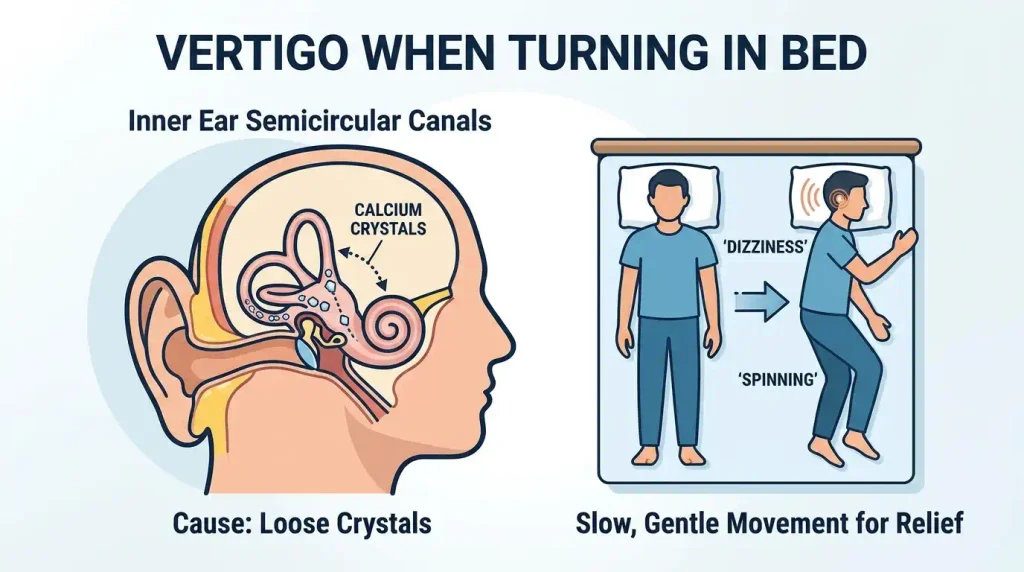
To understand why turning in bed triggers vertigo, we have to look inside the inner ear. Your inner ear contains tiny calcium carbonate crystals (known as otoconia) that help your brain track gravity and body movement.
When these crystals become dislodged from their normal spot and drift into the fluid-filled semicircular canals of the inner ear, they send false signals to your brain whenever you move your head. Therefore, when you roll over in bed, look up, or lie down flat, those loose crystals shift inside the canal, triggering a brief but intense spinning sensation.
Key Signs of BPPV-Related Vertigo:

- Sudden Onset: The spinning starts immediately after you turn over or change your head position.
- Short Duration: The intense room-spinning usually lasts for less than a minute (typically 10 to 30 seconds).
- Triggered by Movement: It only happens when your head moves; you feel fine when staying completely still.
- Associated Symptoms: You might experience mild nausea, lightheadedness, or a brief loss of balance right after the episode.
Other Potential Causes of Dizziness While Lying Down
While BPPV is responsible for the vast majority of rolling-over vertigo cases, other medical issues can also cause nighttime or positional dizziness:
- Vestibular Migraine: Neurological changes that can cause dizziness triggered by motion or position changes.
- Meniere’s Disease: An inner ear disorder linked to fluid buildup, often accompanied by ringing in the ears (tinnitus) and fluctuating hearing loss.
- Cervicogenic Dizziness: Neck stiffness or cervical spine issues that affect balance signals sent to the brain.
How to Find Relief and Manage Rolling-Over Vertigo
If you keep waking up with the room spinning, there are several steps you can take to manage symptoms and seek proper care:
- Avoid Sudden Movements: Move slowly when getting out of bed, lying down, or rolling from one side to the other. Give your inner ear time to adjust.
- Consult a Specialist: An ENT (Ear, Nose, and Throat) specialist or a vestibular physical therapist can accurately diagnose which inner-ear canal is affected.
- The Epley Maneuver: For BPPV, doctors often use a series of specific head and body movements called the Epley Maneuver. This treatment guides the displaced crystals back to their correct chamber, offering fast and often permanent relief.
When to Seek Emergency Medical Attention
While typical BPPV is benign (non-life-threatening) and manageable, some symptoms require immediate medical evaluation. Seek urgent care if your vertigo is accompanied by:
- Sudden weakness, numbness, or difficulty speaking
- Severe, sudden headache
- Double vision or sudden loss of vision
- Fainting or loss of consciousness
Conclusion
Experiencing vertigo when turning in bed can disrupt your sleep and make daily life stressful, but understanding that it is usually caused by harmless displaced crystals in the inner ear (BPPV) brings great peace of mind. Do not just suffer through the morning spins—consult a medical professional, explore targeted repositioning treatments like the Epley maneuver, and take back control of your nights and mornings!